Why would two one-bedrooms a block apart, built in the same decade, list $150,000 to $200,000 apart?
That gap shows up constantly once you start comparing Gold Coast listings side by side. A one-bedroom in a prewar building near Lake Shore Drive lists in the $250,000s. Walk two minutes and a similarly sized unit in a different building asks $450,000 or more. Same neighborhood, same era, same walk to Oak Street Beach. The obvious explanation, that one building is simply nicer, rarely survives a second look at the finishes. The real explanation is structural, and it matters most to the buyer who assumes the cheaper unit is the smarter buy.
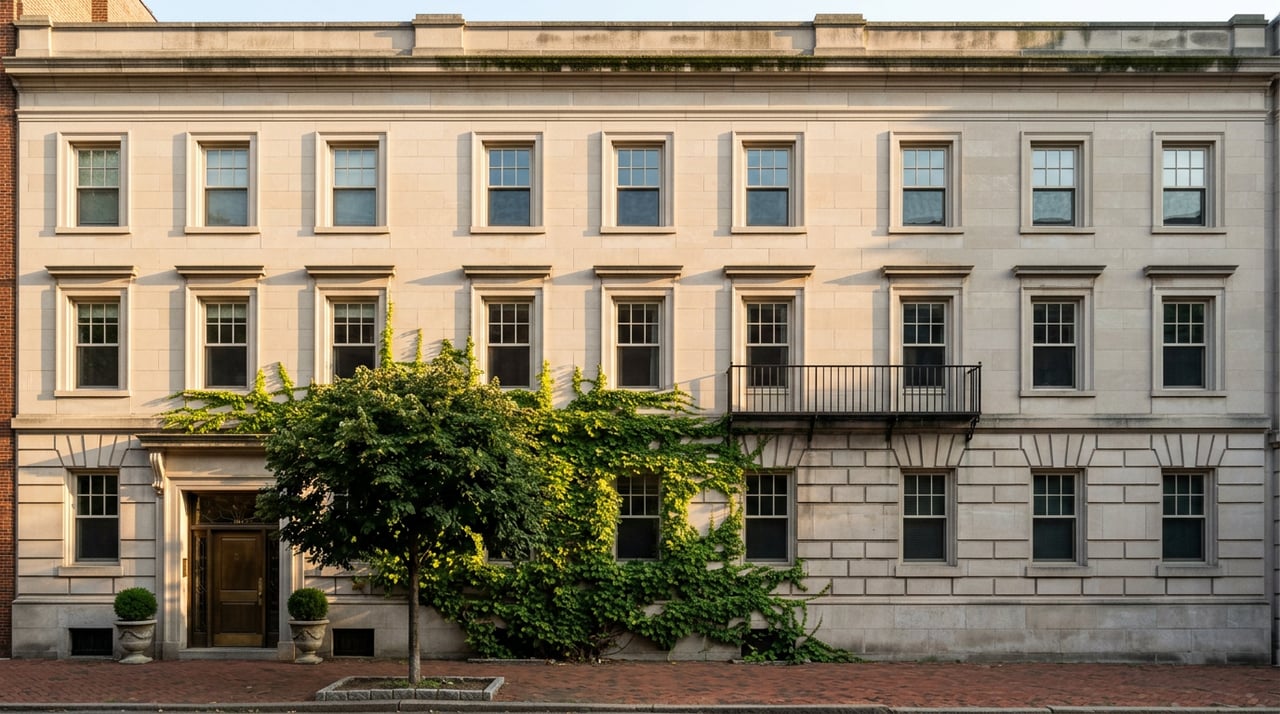
The Gold Coast is one of the few Chicago neighborhoods where a meaningful share of the prewar housing stock is organized as cooperative apartments rather than condominiums. Buildings like 1120 N Lake Shore Drive, 1448 N Lake Shore Drive, and 3750 N Lake Shore Drive are co-ops. So is 860 N Lake Shore Drive, the Mies van der Rohe design that put mid-century modern co-op ownership on the map here, and the paired courtyard buildings at 40-50 W Schiller designed by Andrew Rebori. When you buy into one of these, you're not taking title to real property. You're buying shares in a corporation that owns the entire building, along with a proprietary lease that gives you the right to occupy your specific unit. That difference in legal structure is what creates the price gap, not the square footage or the view.
The Financing Bottleneck Nobody Puts on the Listing Sheet
A condo transfers by deed, and almost any conventional lender will underwrite it. A co-op transfers by stock assignment, and the financing world narrows fast. Only a handful of Chicago lenders will write a share loan at all, and the ones that do typically cap loan-to-value at 50 to 70 percent of the purchase price. That means a buyer who could put 20 percent down on a condo may need to bring 30 to 50 percent cash to close on a co-op of similar value. FHA and VA loans are off the table entirely in a co-op, no exceptions.
Condos have their own version of this friction, just a milder one. As of 2026, roughly 35 percent of Chicago condo buildings carry active FHA approval, and getting a building approved after the fact takes two to six months and costs the association $1,000 to $3,000 in documentation and review fees. Gold Coast buildings tend to skew toward the higher end of that approval rate compared to older buildings elsewhere in the city, largely because of newer construction and stronger reserve funding in some towers. But a co-op buyer doesn't get to wait out an approval process. The door is simply closed.
That financing gap is the first reason the co-op price sits lower. Fewer lenders means fewer qualified buyers, and fewer qualified buyers means the seller has less leverage to hold a high number.
The Interview Nobody Puts on the Listing Sheet Either
Financing access is only half the friction. The other half is the board itself. Co-op boards typically require a full financial application, personal references, and an in-person interview before they'll approve a buyer, and they can decline an applicant under rules set out in their own governing documents. Practical guidance circulating among Chicago real estate professionals suggests budgeting roughly four to eight weeks for board package preparation and the interview itself, depending on how responsive the building is. Condo boards set rules too, but outright denial of a buyer is far less common, since ownership transfers by deed rather than by board consent.
Trade coverage of the Chicagoland co-op market has long described board admissions as the subject of books, news stories, movies, and plays. That reputation isn't just color. It's a real timeline cost that a seller has to disclose to a buyer's agent up front, and a real reason a co-op seller often can't move as fast as a condo seller down the street. Add typical restrictions on subletting, which many Gold Coast co-op boards enforce to keep the building majority owner-occupied, and you have a structure that narrows the buyer pool at every single stage of the transaction.
What the Numbers Look Like Side by Side
| Gold Coast Condo | Gold Coast Co-op | |
|---|---|---|
| How you take ownership | Deed | Stock certificate and proprietary lease |
| Typical entry price, one-bedroom | Roughly $350,000 to $500,000 | Roughly $250,000 and up |
| Financing | Conventional mortgage, broad lender pool | Share loan, handful of Chicago lenders, 50-70% LTV cap |
| FHA/VA eligible | About a third of buildings, more common in Gold Coast | Not eligible |
| Buyer approval | Association rules, denial uncommon | Board interview and financial review, denial possible |
| Typical approval timeline | Standard closing timeline | Add 4-8 weeks for board process |
| Subletting | Often allowed with restrictions | Frequently limited or restricted |
| Property tax billing | Billed directly to owner by Cook County | Paid by the corporation, passed through in maintenance fee |
As of February 2026, Redfin's neighborhood snapshot put the Gold Coast median sale price in the mid-$500,000s with price per square foot trending in the high $300s, a blended figure that folds both ownership types together. That number is useful as a backdrop, not as a price target for either structure specifically. A same-building resale comparison tells you far more than a zip-code average, and that's especially true here, where two ownership models are sitting inside the same median.
The Reserve Question That Outweighs the Sale Price
Whichever structure you're weighing, the number that should worry you more than the listing price is the building's reserve fund. Special assessments in Chicago condo and co-op buildings alike commonly range from $5,000 to $50,000 or more per unit, triggered by facade repairs, roof replacement, or elevator modernization. Elevators alone typically need a full modernization every 25 to 30 years, and that project can run into the hundreds of thousands of dollars per cab in an older high-rise. A reserve fund that's genuinely healthy usually has around 70 percent of recommended reserves on hand, with 20 to 30 percent of the annual budget flowing into that reserve every year. Anything well below that is a signal, not a footnote.
Illinois condominium sales come with a formal disclosure, known as the Section 22.1 disclosure, that puts reserve balances, pending litigation, special assessment history, and owner delinquency rates in front of a buyer before closing. Co-ops aren't governed by the same condominium statute, since you're buying corporate shares rather than a condo unit, so the equivalent due diligence has to come from somewhere else: the corporation's financial statements, board minutes, the proprietary lease, and the building's sublet policy. A buyer who skips that step because the co-op price already looked like a bargain is the buyer most likely to get a surprise assessment notice within the first year.
Who the Discount Actually Fits
None of this makes a Gold Coast co-op a bad purchase. For a buyer with strong liquidity who isn't relying on maximum mortgage leverage, who plans to hold long enough that resale speed isn't a pressing concern, and who values a building culture that's majority owner-occupied, the lower entry price is a real advantage, not a trap. For a buyer who needs a high loan-to-value mortgage, wants the flexibility to rent the unit out later, or is working against a tight closing deadline, the same discount can turn into months of delay and a financing dead end.
The price on the listing sheet tells you what the unit costs. It doesn't tell you what kind of buyer the building was built to accept, and that's the piece worth understanding before you write an offer, not after.
A Few Questions Worth Asking Before You Tour
Can I finance a Gold Coast co-op with an FHA or VA loan? No. Co-ops are ineligible for both loan types because you're purchasing shares rather than real property.
How long should I expect a co-op board approval to take? Plan on four to eight weeks for the application, financial review, and interview, depending on the building's meeting schedule and responsiveness.
Does the condo I'm considering have FHA approval? Ask before you fall for a specific unit. As of 2026, only about a third of Chicago condo buildings carry active FHA approval, and getting a building approved after the fact takes two to six months.
What should I ask for in a co-op building instead of the standard condo disclosure? Request the corporation's financial statements for the last two to three years, recent board meeting minutes, the proprietary lease, the sublet policy, and any record of pending or recent special assessments.
If you're comparing a Gold Coast co-op against a condo down the block and want someone to walk the financing math and the board timeline with you before you write an offer, that's exactly the kind of conversation Maureen Burns has with clients directly. Let's Connect.