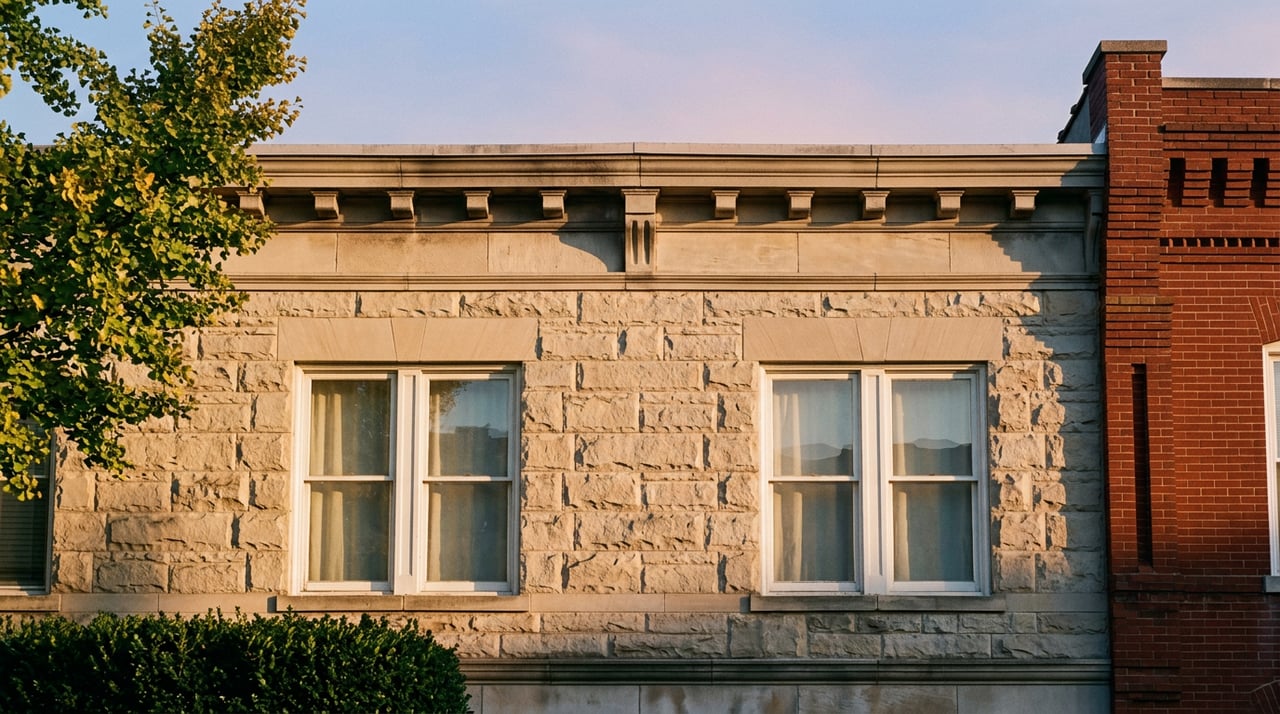
A buyer under contract on a greystone near Armitage and Orchard called me the week her inspection report came back. Everything inside was fine. The trouble was on the parapet, the low wall that caps the roofline and hides the chimney flashing from the street. Her inspector flagged deteriorating mortar and a hairline crack running along one section of coping stone. Her lender wanted it resolved before closing. Her attorney wanted a repair credit or a completed fix. Nobody on either side of the table mentioned that the building sat inside a Chicago Landmark district, and that a repair like this one doesn't start with a contractor's estimate. It starts with a filing.
That single fact changes the math on almost every vintage purchase in this neighborhood, and it rarely comes up until someone is already staring at a attorney review clock.
Why This Applies to So Much of Lincoln Park
Lincoln Park carries three separate Chicago Landmark districts inside its boundaries: the Mid-North District, protected since 1977 and built out largely between 1865 and 1900, the Fremont Row House District, twenty Italianate row houses dating to the 1870s, and the Armitage-Halsted District, the shopping corridor most residents walk through without realizing it's regulated the same way. The heaviest concentration of well-preserved greystones sits along Orchard, Burling, and Cleveland, blocks where entire runs of limestone facades create the look the neighborhood is known for.
If a property sits inside one of these districts, or carries individual landmark designation, any exterior work visible from the public way falls under review by the Commission on Chicago Landmarks before the city issues a building permit. That includes tuckpointing, lintel replacement, parapet and coping repair, and window changes. It does not typically extend to work that can't be seen from the street or sidewalk, which is why a rear porch repair and a front facade repair on the same house can follow completely different timelines.
What Actually Triggers a Review
Chicago's building code allows homeowners to replace up to 50 square feet of masonry in-kind, brick for brick, without a standard permit, on residential buildings up to four stories. That exemption stops applying the moment the property is a designated or proposed Chicago Landmark, or sits inside a landmark district. The City of Chicago's own guidance on masonry work states this directly: the small-repair exemption may not apply to landmark properties at all.
So a repair that would be a same-week fix on a non-landmark two-flat in Roscoe Village becomes a documentation project on a greystone on Burling. The Historic Preservation Division reviews permit applications for landmark and proposed landmark properties to confirm the work won't damage the historical or architectural character the district was designated to protect. For most routine masonry repairs, that review happens administratively through Landmarks staff rather than a public hearing, but it still has to happen before the Department of Buildings will issue the permit.
The Timeline Cost Nobody Prices In
The friction here isn't that the repair gets denied. Landmarks staff approve routine, in-kind masonry work constantly, because preserving the original limestone and matching mortar is the whole point of the district. The friction is sequencing. A contractor who submits generic specifications instead of a mortar-matching plan and material samples gets sent back for resubmission, and each round of that adds real time, often measured in weeks rather than days. A contractor who has worked landmark properties before, keeps pre-approved mortar formulas on file, and knows what Landmarks staff want to see the first time avoids most of that delay. Firms like Krisbud Construction, Fortune Restoration, and EDMAR Corporation work in Lincoln Park, but buyers should ask any contractor directly about their experience with Landmarks filings.
For a buyer working inside a typical attorney review and inspection period, that distinction matters. If a parapet or lintel issue surfaces during inspection on a landmark property, the honest question isn't "how much will this cost." It's "who is doing the filing, and how fast can they get it right the first time." A seller who has already had a landmark-experienced mason document the repair scope walks into negotiation with leverage a generic three-quotes approach can't match.
The Part Most Buyers Never Learn Until It's Relevant
Here's the detail that flips the story from purely a cost. The City of Chicago waives permit fees for maintenance work on protected elements inside a landmark district, and tuckpointing is explicitly named as one of the categories that qualifies. Landmark Lincoln Park's own resource page lays this out: the city supports upkeep of designated properties by waiving permit fees for protected-element maintenance, along with certain use and code requirements that would otherwise conflict with preserving the original look of the building.
That means the landmark process, which adds review time on the front end, offsets part of its own cost on the back end. It doesn't erase the delay. It does mean buyers and sellers should stop treating "it's in a landmark district" as pure downside. The real cost is calendar days, not necessarily dollars, and full-building repoints in this neighborhood commonly run somewhere between $8,000 and $25,000 depending on height, access, and mortar type, whether the property is landmarked or not. Small spot repairs on a single wall section tend to land closer to $500 to $1,500. Those ranges don't change because of landmark status. The permit fee line does.
Why the Pace of This Market Makes the Timing Question Sharper
Lincoln Park sold at a median price of $885,000 over the three months ending June 2026, up 16.4 percent from the same period a year earlier, with homes averaging 33 days on market compared to 37 days the prior year. That's a market where buyers are competing hard enough that a slow inspection resolution can cost a deal outright, and where sellers who can move fast on a repair have real pricing leverage. A parapet issue that needs a Landmarks-compliant repair plan isn't the kind of thing to discover for the first time during a inspection contingency. It's the kind of thing worth asking about before the property ever goes under contract, especially on a block inside Mid-North, Fremont Row House, or Armitage-Halsted.
What This Means If You're Buying or Selling on a Landmark Block
If you're a seller with a greystone or row house in one of these districts, get ahead of exterior condition before you list. A pre-listing inspection that flags a masonry issue gives you time to have a landmark-experienced contractor document the repair and start the review process before a buyer's clock starts ticking. If you're a buyer, ask the listing agent directly whether the property is inside a designated district, and if the inspection turns up an exterior issue, ask who is going to handle the filing and how quickly they've moved similar repairs through Landmarks review before. That single question tells you more about your actual timeline than any repair estimate will.
A Few Questions Worth Asking Before You Sign
What if the repair is in the back, not visible from the street? It's worth confirming with Landmarks staff rather than assuming.
Does being in a landmark district hurt resale value? Nothing in the data suggests that. Lincoln Park's landmark blocks, including Mid-North and the streets around Orchard and Burling, are consistently among the neighborhood's most sought-after addresses. The designation protects the character that makes them desirable in the first place.
If you're weighing a greystone purchase or preparing to list one on a landmarked block, I'd rather walk you through what a specific repair timeline looks like before you're inside a contingency window. That's the kind of thing I handle directly, not something I hand off. Let's Connect and I'll help you figure out exactly what you're working with.
This article is general information, not legal, tax or financial advice. Consult a qualified professional about your situation.