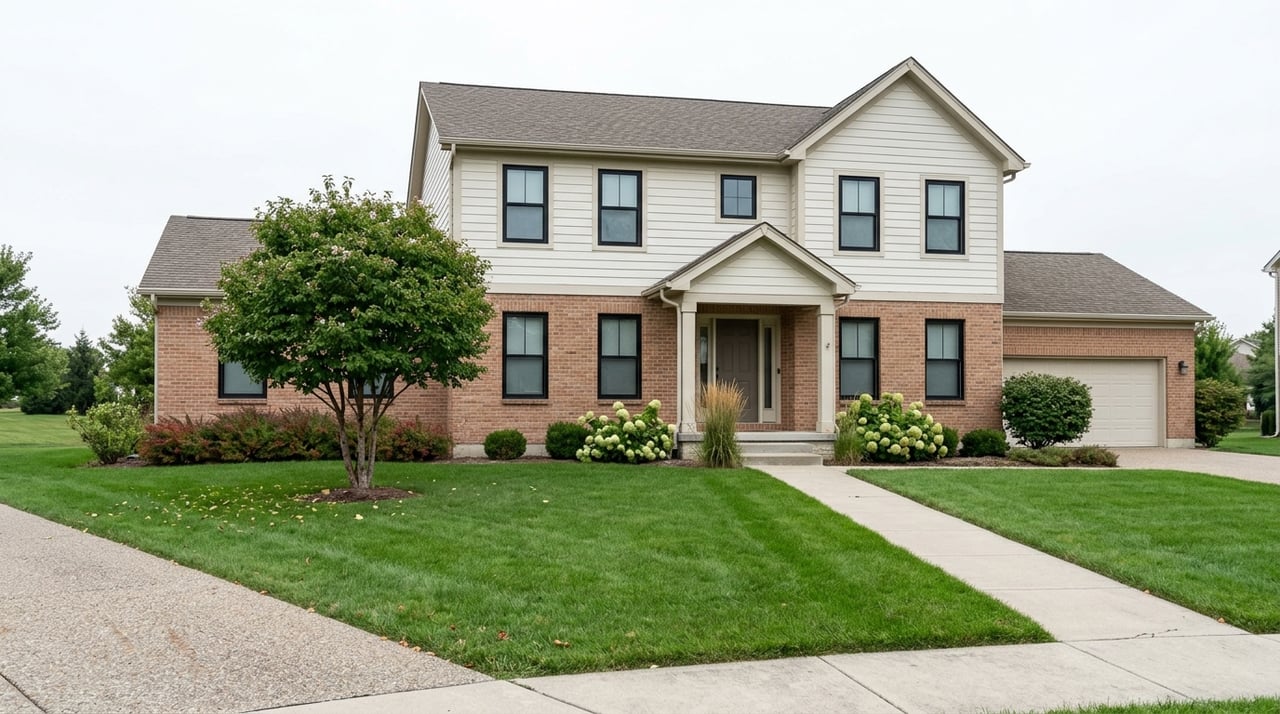
A couple I worked with this spring pulled up a Munster listing next to their Lincoln Park condo's tax bill and did the math themselves before calling me. The Munster house was priced about the same as what they'd clear on their sale. The listing sheet showed an annual tax bill under $3,000. Their Chicago bill was north of $6,000. They were ready to write an offer that afternoon on the tax line alone.
Here's what I told them, and what I tell most buyers crossing the state line: that number on the listing sheet is the seller's number, not yours. It reflects deductions the seller has been building for years, an assessed value that may be years out of date, and a homestead status that does not travel with the deed. The day you close, that bill resets, and understanding how it resets matters more than the number itself.
The Number on the Sheet Is a Snapshot, Not a Promise
Indiana property tax bills are built on a base of deductions that only apply to owner-occupants who have filed for them. The Standard Homestead Deduction currently shields $48,000 of assessed value, and a Supplemental Homestead Deduction removes 40 percent of what's left after that. Neither deduction is automatic for a new owner. You have to file with the county auditor after closing, and until you do, the home can be billed as if no one lives there.
That's the mechanic buyers moving from Chicago tend to miss. They're used to Cook County's Homeowner Exemption auto-renewing year over year as long as ownership doesn't change. In Lake County, ownership changing is exactly the trigger that unwinds the seller's deductions and starts your filing clock. If you close in the fall and don't file promptly, your first tax cycle can look nothing like the number that sold you on the house.
Reassessment adds a second layer. Indiana counties reassess in mass cycles rather than home by home, and a sale itself can flag a property for a closer look at market value the next time the rolls update. A house that's been under-assessed relative to its actual sale price for years can see its assessed value catch up once new ownership triggers a review. None of this means the house becomes unaffordable. It means the bill you budget from should be a projection built on your purchase price and your own deduction filing, not a copy of what's printed on the seller's disclosure.
Three Numbers Are True at Once
This is where the real confusion sets in, because Munster genuinely does have three different tax figures floating around, and all three are accurate depending on what you're asking.
The first is the certified gross rate, which for Munster in 2026 sits at 2.8261 percent. Read on its own, that number looks worse than almost anything a Chicago buyer would expect from a state that markets itself on lower property costs. It's also not what anyone actually pays, because Indiana applies a constitutional circuit breaker that caps a homestead's tax bill at 1 percent of gross assessed value before any deductions are even factored in.
The second number is that 1 percent cap itself, which is the figure that shows up in every "why Indiana is cheaper" argument. It's real, but it's a ceiling, not a bill. The cap tells you the maximum you could owe relative to assessed value. It doesn't tell you what a typical homeowner in a typical Munster house is actually paying once deductions, local levies, and assessed-versus-market-value gaps are factored in.
The third number is the one that matters for budgeting: the effective rate homeowners actually pay, which property tax data platform Ownwell puts at a median of 1.25 percent of market value in Munster, with a median annual bill of $3,697. Homeowners at the 25th percentile see closer to $2,960, while those at the 75th percentile land near $5,048, depending on home value and specific deductions claimed.
So the honest answer to "what will I pay in Munster" is not 2.8 percent, and it's not exactly 1 percent either. It's closer to that 1.25 percent effective figure, applied to what you actually paid for the house, after you've filed your own deductions.
How Munster Compares to Its Neighbors, and to Cook County
Northwest Indiana isn't one flat tax environment either. Dyer's 2026 certified gross rate is 2.5288 percent, and Schererville's is 1.9870 percent, both lower on paper than Munster's. But the same logic applies in each town: the certified rate is a ceiling input, not the bill, and effective rates depend on local levies and each home's assessed value relative to its deductions.
| Town | 2026 Certified Gross Rate |
|---|---|
| Munster | 2.8261% |
| Dyer | 2.5288% |
| Schererville | 1.9870% |
Now set that against where most of my relocating clients are coming from. Cook County's median effective property tax rate runs between roughly 1.91 and 2.14 percent of market value, with a median annual bill around $6,191. Chicago itself isn't one number either. Depending on ZIP code and which school district and levies apply, effective rates inside the city swing from about 1.11 percent up near 2.20 percent, and annual bills in Ownwell's Chicago data range from $634 in one ZIP to $9,070 in another. A Lincoln Park or Gold Coast seller comparing their own bill to a Munster listing is really comparing one point in a wide Chicago range to one point in a narrower Munster range, and the honest comparison requires knowing where your specific property sits in each.
Put plainly: Munster's effective 1.25 percent median is still meaningfully below Cook County's 1.91 to 2.14 percent median, and below most of Chicago's ZIP-level range. That gap is real. It's just smaller and more nuanced than the gross rate on a spreadsheet would suggest, and it only shows up correctly once you've filed for your own deductions.
The 2026 Change That Works in a New Buyer's Favor
There's a timing detail worth knowing if you're closing this year. Indiana's legislature passed Senate Enrolled Act 1 in 2025, a multi-year property tax reform that phases in through 2031. The piece that lands in 2026 is an automatic 10 percent credit on qualifying homestead bills, capped at $300, applied by the county auditor with no separate application required once your homestead deduction is on file. The supplemental homestead deduction also increases to 40 percent of remaining assessed value this year, up from the prior 37.5 percent, before continuing to climb in future years as the standard deduction eventually phases out.
None of this changes the core lesson. The credit and the deduction bump only apply to a homestead that's properly filed. If you close on a Munster home in 2026 and don't file your deduction paperwork promptly with the Lake County Auditor, you don't just miss out on the number printed on the old listing. You also miss this year's new credit.
What This Means If You're Actually Shopping Right Now
Munster's housing market through the first half of 2026 has been steady rather than frantic. Home values have been sitting in the high $370,000s to mid $380,000s, with roughly two and a half months of supply, which is tighter than a balanced market but looser than the extremely thin inventory of a few years ago. Homes have generally been going under contract in around a month, and Northwest Indiana Realtors association data points to serious, well-prepared buyers staying active rather than waiting on the sidelines.
That pace matters for the tax conversation, because it means you don't have the luxury of doing this math after you've already fallen for a house. Buyers who understand their real effective tax number, not the gross rate and not the seller's current bill, walk into an offer knowing their actual monthly payment before they're competing against another buyer under a deadline. That's the difference between reacting to a listing sheet and negotiating from a position of knowing exactly what you can carry.
A Few Questions Worth Asking Before You Write an Offer
Will my tax bill match the number on the listing? Only if the seller's deductions and assessed value happen to match what you'll qualify for as a new owner, which is rare. Ask your title company or the Lake County Auditor's office what the bill looks like without the seller's existing exemptions applied.
Does the 1 percent cap protect me the day I close? The cap applies to homestead property, and homestead status requires your own filing after closing. Until that's on file, the property may be billed at a higher non-homestead rate.
Is Dyer or Schererville simply cheaper? Not automatically. Their certified gross rates are lower, but effective rates depend on local levies and individual assessed values, so the comparison has to be run property by property rather than town by town.
If you're weighing a move from Chicago's North Side into Munster, Dyer, or another Northwest Indiana community and want the actual numbers run for a specific property before you make an offer, I'd rather walk through that math with you now than have you discover it on your first tax bill. Reach out to Maureen Burns and let's connect.